


Introduction
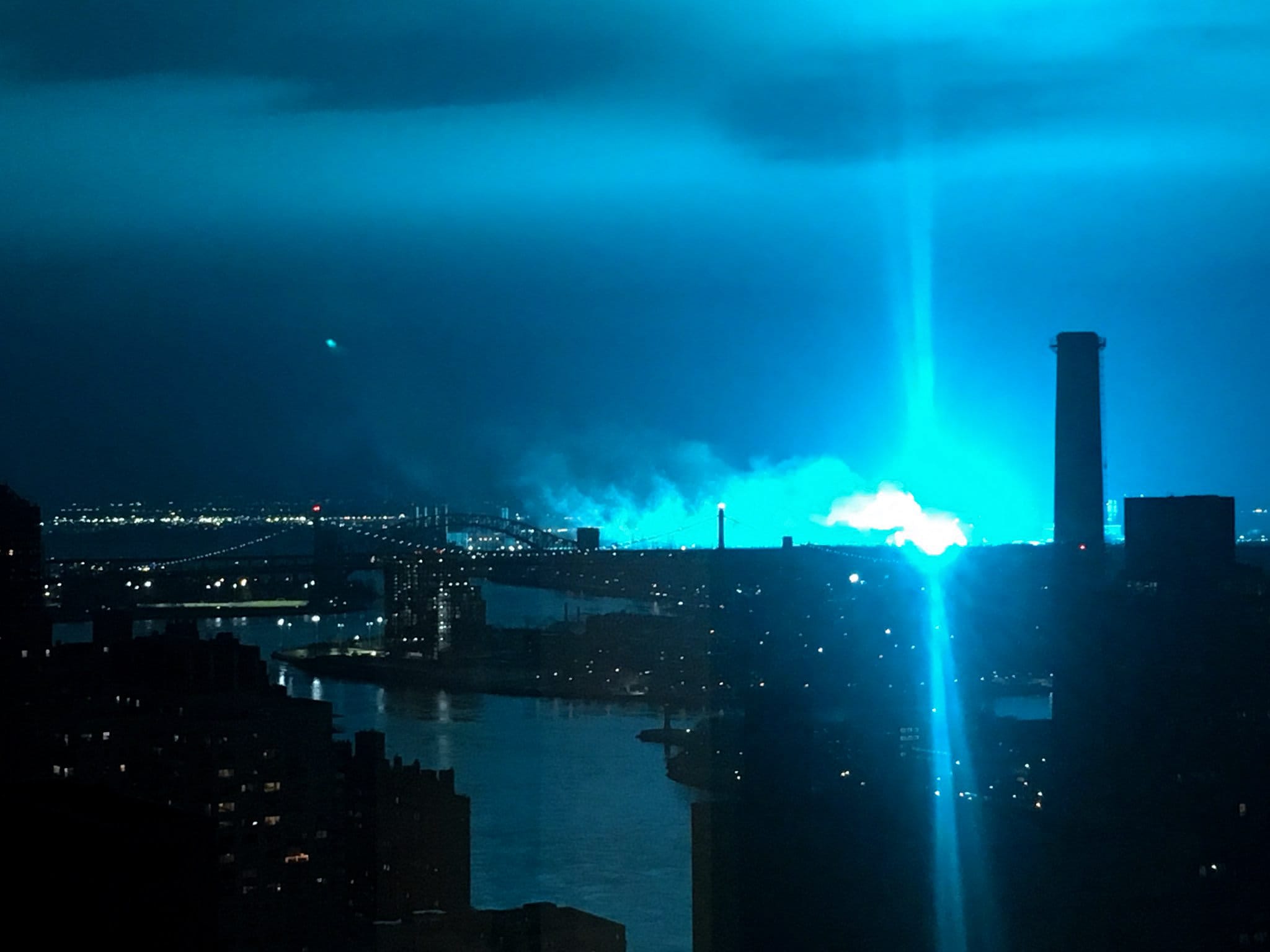
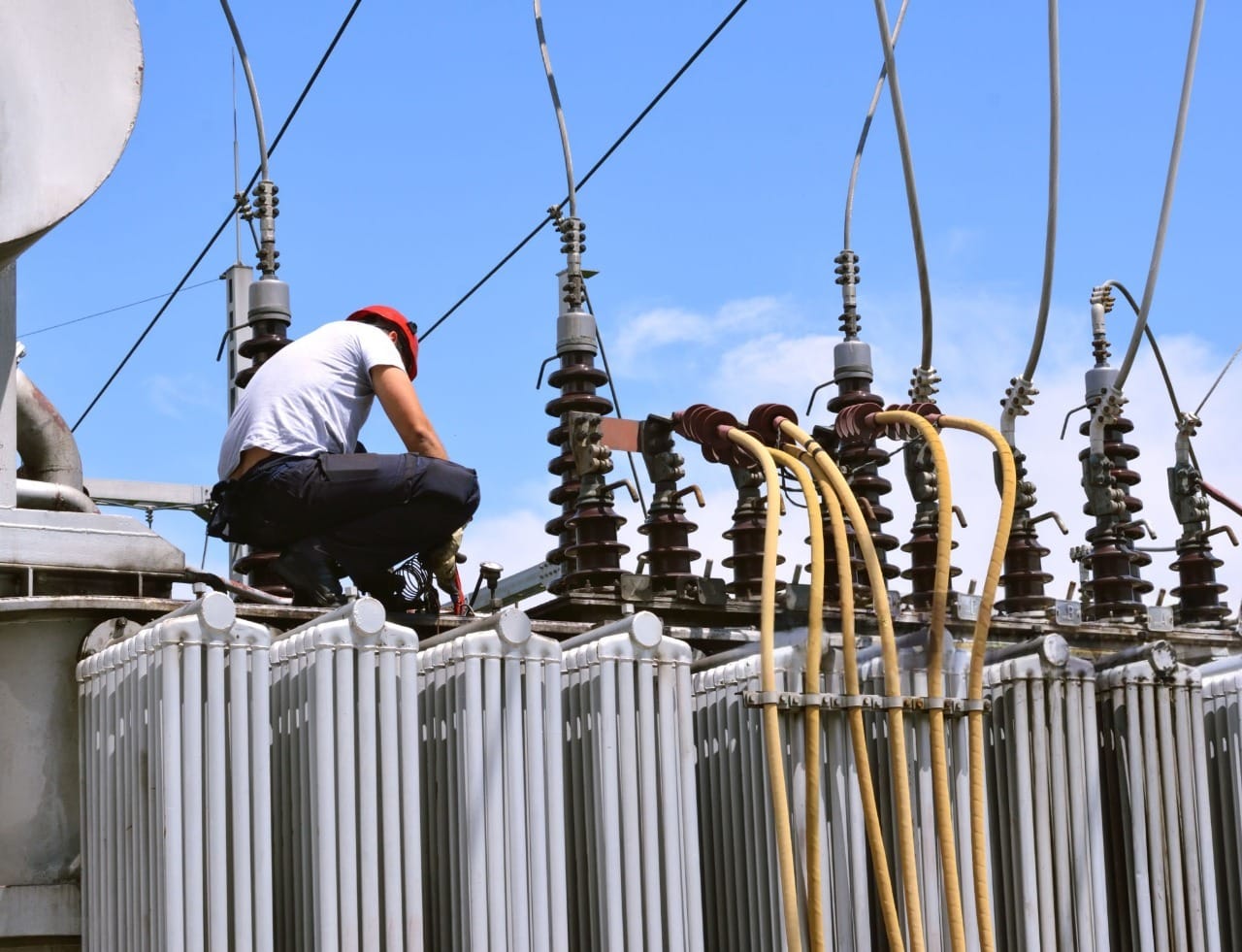
Transformer explosions are caused by rapid internal pressure escalation following electrical faults in oil-filled transformers.
They are not the result of protection coordination failures, delayed fault detection, or insufficient maintenance alone.
Preventing transformer explosions is fundamentally a pressure–time problem:
the physical escalation occurs within milliseconds, well before conventional electrical or fire protection systems can act.
Understanding this mechanism is essential to identify what can — and cannot — be prevented.
What Causes a Transformer Explosion?
Transformer explosions typically originate from an internal electrical fault, most commonly an internal arcing fault inside the transformer tank.
The escalation sequence is well documented in international engineering literature:
- An internal electrical arc forms inside the oil-filled tank
- Surrounding oil is instantaneously vaporized
- A dynamic pressure wave propagates through the tank
- Rapid gas expansion creates static overpressure
- If pressure exceeds tank mechanical limits, structural rupture occurs
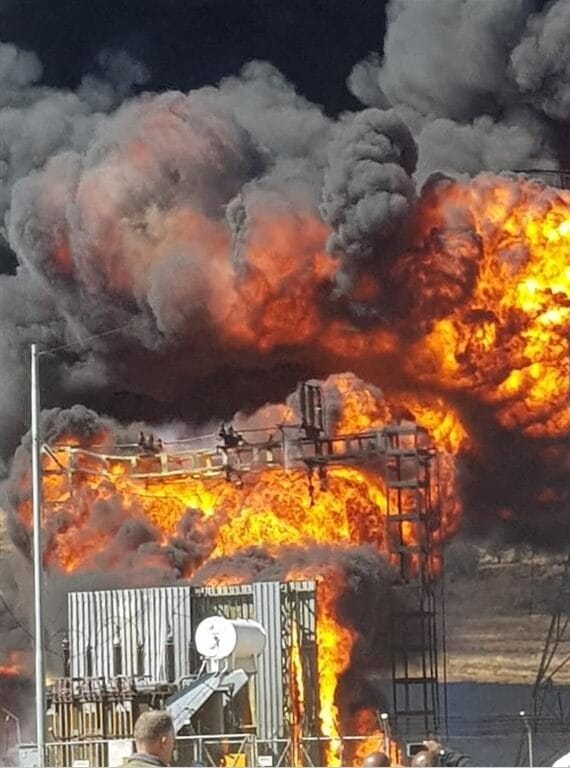
- Oil and hot gases are expelled, leading to fire or explosion
This sequence develops within milliseconds.
The explosion itself is therefore a mechanical failure caused by uncontrolled pressure rise, not an electrical phenomenon.
Why Conventional Protection Systems Do Not Prevent Explosions
Most transformers are equipped with multiple protection layers, including:
- Electrical protection relays and circuit breakers
- Pressure Relief Devices (PRDs)
- Gas relays and condition monitoring systems
- Fire detection and suppression systems
While essential for fault detection, isolation, and post-event mitigation, these systems do not act within the first milliseconds of pressure escalation.
Key limitations include:
- Pressure Relief Devices are designed for static overpressure, not dynamic pressure waves
- Electrical protections operate after fault detection and relay coordination
- Fire protection systems act after oil release or ignition
As a result, a time-scale gap exists between fault initiation and protection response.
Explosion prevention is a time-scale problem, not a detection problem.
This conclusion is consistently reflected in IEEE, CIGRE, and NFPA publications.
How Transformer Explosions Can Be Prevented
Preventing transformer explosions requires acting on the physical mechanism itself, not reacting to its consequences.
Engineering literature identifies a single effective principle:
Rapid Mechanical Depressurization
Explosion prevention is achieved by:
- Reacting to the first dynamic pressure wave generated by the internal fault
- Opening a large pressure relief path within milliseconds
- Limiting peak internal pressure before structural limits are exceeded
This approach directly interrupts the escalation sequence before tank rupture occurs.
It is fundamentally different from conventional protection systems, as it operates during the initial pressure rise, not afterward.
This principle is referenced and discussed in:
- IEEE Std C57.156 – Tank Rupture Mitigation
- CIGRE TB 445 – Transformer Fire Safety Practices
- NFPA 850 – Fire Protection for Electric Generating Plants and Substations
Engineering-Based Explosion Prevention in Practice
Rapid mechanical depressurization can be implemented through passive, fully mechanical systems designed to operate autonomously during an internal fault.
Such systems:
- Do not rely on sensors, electronics, or external power
- Are continuously active under all operating conditions
- Integrate with existing electrical protection schemes
- Do not interfere with normal transformer operation
SERGI develops and implements explosion prevention solutions based on this physics-driven engineering principle, validated through full-scale testing, simulation, and real-world operation across a wide range of transformer types and environments.

Scope and Limitations
Explosion prevention systems do not prevent electrical faults from occurring.
They are specifically designed to:
- Prevent tank rupture,
- Limit fire and explosion escalation,
- Reduce collateral damage,
- Improve asset survivability and recovery.
Their applicability depends on:
- Transformer design
- Installation environment
- Operating conditions
- Regulatory and site-specific requirements
Project-specific engineering assessments are required to determine suitability and integration.
Why Explosion Prevention Is a Governance Decision
Transformer explosions are rare events with disproportionate consequences.
Beyond asset damage, they can result in:
- Extended outages and loss of critical services
- Safety risks to personnel and the public
- Environmental damage
- Regulatory and reputational impact
- Executive and Board-level accountability
Because the escalation mechanism is known and preventable, explosion prevention is increasingly viewed as a decision that can — and should — be taken before an event occurs.
References
- IEEE Std C57.156 – Guide for Tank Rupture Mitigation of Liquid-Immersed Power Transformers
- CIGRE TB 445 – Transformer Fire Safety Practices
- NFPA 850 – Recommended Practice for Fire Protection for Electric Generating Plants and Substations
- CIGRE A2.37 – Transformer Reliability Survey