


Executive context
In high-risk energy environments, transformer protection is no longer a purely technical discussion.
When assets are large, oil-filled, and embedded in constrained or sensitive environments, the question is not whether protection systems exist — but whether the decisions behind their selection remain defensible when a real internal fault occurs.
This insight examines how engineering judgement, validation evidence, and governance considerations converge when conventional protection approaches reach their limits.
The decision challenge
Across critical infrastructure sectors, operators face a recurring dilemma:
- protection systems are often designed around detection and response,
- while catastrophic transformer events are driven by fast, internal, physical failure mechanisms.
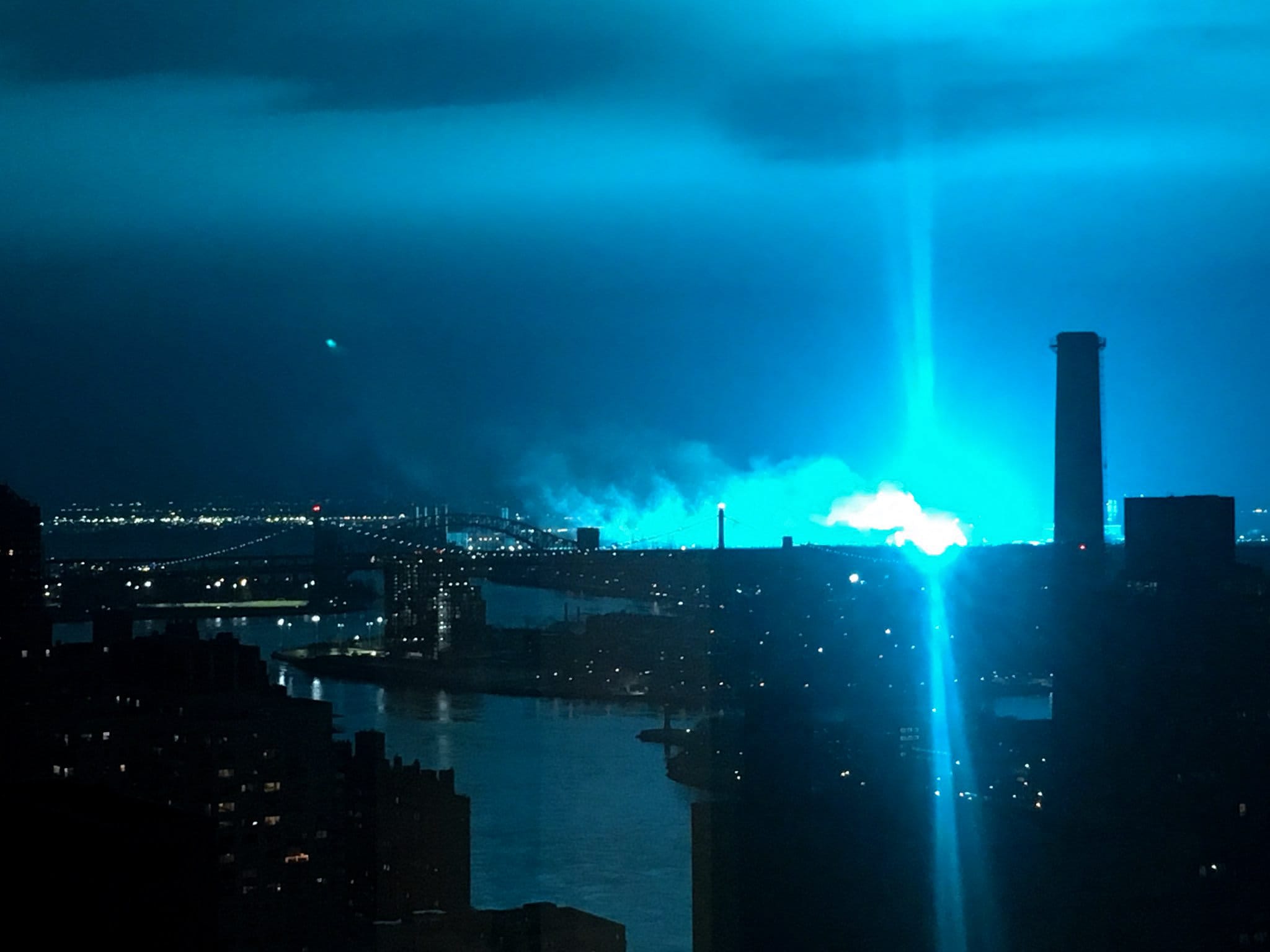
Electrical arcing, rapid gas generation, dynamic pressure rise, and mechanical rupture develop within milliseconds — frequently faster than relays, breakers, or fire-fighting systems can act.
In these scenarios, decision-makers must confront a fundamental governance question:
Is the selected protection strategy capable of being justified — technically, regulatorily, and contractually — if the asset fails despite compliance with existing standards?
Where conventional governance breaks down
In several documented industrial cases, investigations have shown that:
- compliance with applicable standards did not prevent catastrophic escalation,
- fire mitigation systems addressed consequences, but not the initiating physical event,
- protection strategies relied on assumptions that were not aligned with real internal fault dynamics.
This creates a governance gap:
- systems may be compliant,
- yet decisions remain exposed once physical reality overrides design intent.
Reframing protection as a defensible decision
In response, some operators and authorities have shifted their evaluation criteria.
Instead of asking “Is the solution compliant?”, they ask:
- Has the protection behaviour been validated under representative internal fault conditions?
- Are activation times compatible with dynamic pressure phenomena, not static thresholds?
- Is performance demonstrated through full-scale or representative testing, not extrapolation?
- Can residual risk be explicitly described and justified to insurers and regulators?
This reframing transforms protection from a product choice into a governance decision grounded in physics.
The role of independent proof
A key factor in defensible decision-making is the availability of independent validation.
Decisions supported by:
- third-party testing programmes,
- multiphysics simulations aligned with observed failure mechanisms,
- documented field feedback over time,
carry a fundamentally different weight in post-incident analysis than those based solely on design intent or catalogue claims.
In regulated environments, proof is not optional — it is a prerequisite for accountability.
Implications for operators, insurers, and authorities
This evolution has direct implications:
- Operators gain clarity on what can be prevented versus what must be mitigated.
- Insurers can assess risk based on demonstrated behaviour, not assumptions.
- Authorities can distinguish between formal compliance and substantive safety.
Ultimately, governance quality is revealed not at commissioning — but when an asset fails.
SERGI’s contribution
SERGI supports infrastructure stakeholders by bridging the gap between engineering reality and governance responsibility.
Rather than promoting generic protection concepts, SERGI contributes to:
- physically grounded engineering assessments,
- validation-driven protection architectures,
- documentation that supports defensible decisions under scrutiny.
Because in critical infrastructure, responsibility cannot be delegated to assumptions.
Understanding what can be prevented — and what cannot — is the foundation of responsible infrastructure governance.