



You are here:
HS2D
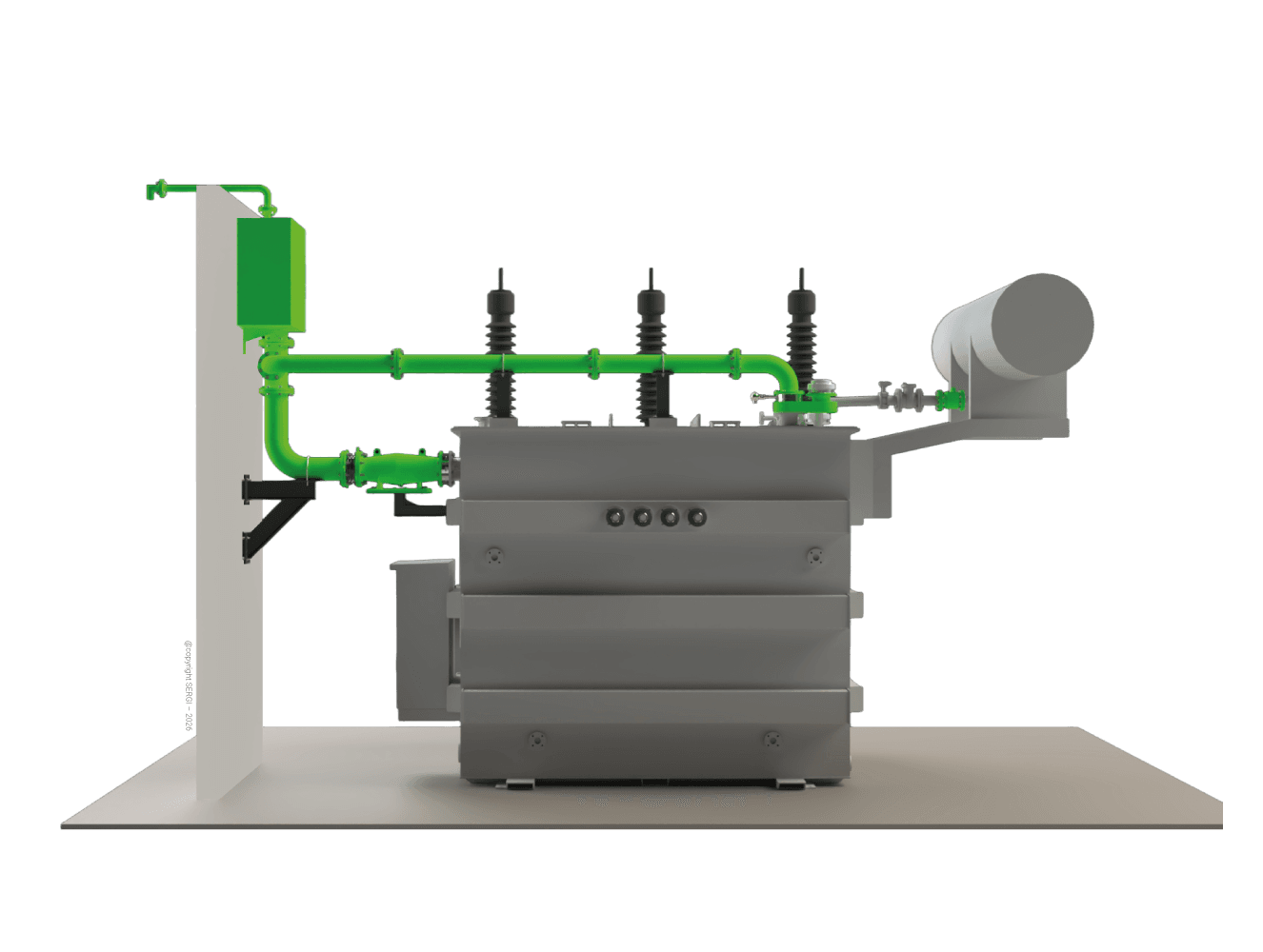
HS2D - Modular Mechanical Protection Architecture
A modular implementation route for selected transformer applications, subject to its own engineering and evidence assessment.
HS2D applies SERGI mechanical pressure-relief principles through a modular architecture. Selected component and engineering experience may be shared with other SERGI solutions; test evidence, modelling, field outcomes and performance claims do not automatically transfer between configurations.
When a Modular Architecture May Be Appropriate
Compact Integration
Supports selected applications where available space and interfaces are constrained.
Phased Deployment
Allows the protection scope to be structured according to asset criticality, project phasing and validated priorities.
Retrofit Potential
Can support selected existing-transformer applications after verification of the as-built geometry, hydraulic topology and installation constraints.
Configuration-Specific Qualification
Each HS2D application requires its own evidence mapping, engineering assessment, acceptance criteria and lifecycle controls.
| Approach | Function | Qualification Boundary |
|---|---|---|
Transformer Protector (TP) |
Integrated protection architecture covering the agreed transformer scope |
Requires transformer- and site-specific engineering |
HS2D |
Modular protection scope for selected compartments or applications |
Requires configuration-specific evidence and validation |
Existing Mitigation Layers |
Electrical protection, pressure relief, structural measures, fire protection and recovery planning |
Each layer addresses different variables and residual risks |
Evidence and Experience Boundary
HS2D benefits from SERGI engineering knowledge of mechanical pressure-relief principles. However, Transformer Protector tests, models and field outcomes do not automatically qualify every HS2D configuration. The applicable evidence set must be defined and approved for each project.